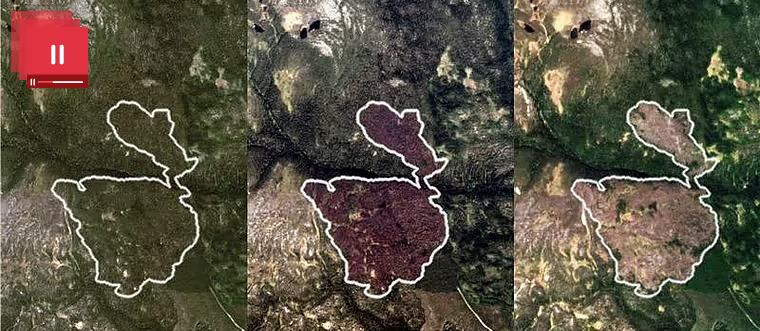
In July 2018, a fire broke out on Sonfjället in Härjedalen. Today, seven years later, almost none of the original vegetation has returned.
The risk of major fires in the Swedish mountains has seemed distant, but now researchers are warning that they have already started – and that there will be more of them.
- “Of course I am worried. No reindeer can graze here again in my lifetime,” says reindeer herder Anja Fjellgren Walkeapää.
Sweden has so far been spared major fires on our sensitive bare mountains, unlike other countries whose tundras have been hit hard, such as in Canada and Russia.
But now researchers at the University of Gothenburg are warning that the risk of extensive mountain fires has also increased in Sweden in line with climate change. Tree research also shows that our southernmost mountains have become significantly drier in the past two decades.
- If we get more dry, hot summers, more places will burn, says Robert Björk, professor of ecosystem science at the University of Gothenburg.
Extremely slow regrowth
In the hot summer of 2018, the Sonfjället National Park in Härjedalen was hit by a major fire. According to researchers, it is the first major Swedish fire that has also reached the sensitive bare mountains.
On the bare mountains, the vegetation is very sensitive and most of it grows extremely slowly. There are plants here that are hundreds of years old, sometimes with roots that are several thousand years old. A fire can therefore be devastating for the ecosystem.
Parts of Sonfjället have also been important grazing land for reindeer in the winter, but today, seven years after the fire, there is still no food for the reindeer in the fields.
- It will probably take around 80 years before the reindeer lichen returns, says Anja Fjellgren Walkeapää, forester and reindeer herder in the Mittådalen Sami village.
Mountain fires cause more fires
More studies of Swedish mountain fires and their consequences are now needed, says Professor Robert Björk.
- Fires in these areas are poorly mapped. And we don’t actually know how our mountains are affected by this, says Robert Björk.
Research in other places in the Arctic shows that fires on the tundra often lead to more bushy vegetation – which in itself provides more fuel for even more fires. And also, in some cases, that the original vegetation on the bare mountain never returns.