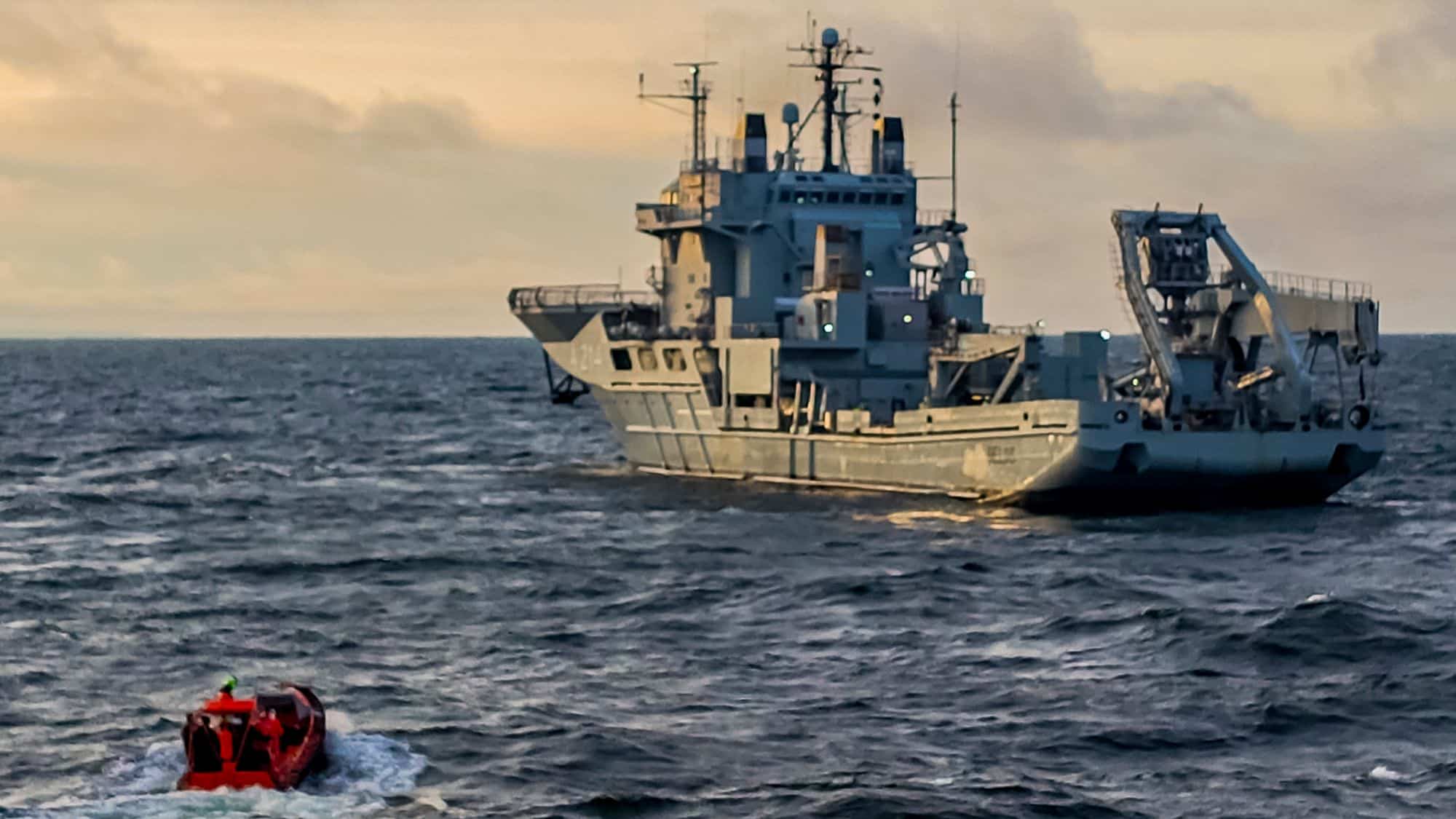
NATO is currently planning a major naval operation in the Baltic Sea to protect cables and submarine cables on the seabed.
Sources tell SVT that Sweden is expected to send several ships to participate in the operation.
There is work going on now among the allies to see what resources it could be about.
Defense Minister Pål Jonson (M)
At the NATO headquarters in Brunssum, the Netherlands, a so-called force generation process is currently underway where the countries around the Baltic Sea notify units that can participate in the effort, SVT learns.
The effort is a so-called “Enhanced Vigilance Activity” and is expected to last for several months. The purpose is to protect critical infrastructure underwater, with the help of both naval vessels and aircraft from a number of member states.
Planning work
Planning work is also underway from the Swedish side, where the navy is investigating which ships should be able to participate and when. According to SVT’s information, it concerns several Swedish naval vessels, including corvettes, which will soon join the effort to protect underwater infrastructure on the seabed.
There is work going on within NATO and it is clear that we have important resources and capabilities in the Baltic Sea.
Defense Minister Pål Jonson (M)
The navy does not want to give any details about participating ships, but press officer Jimmie Adamsson confirms that preparations are underway:
Work is underway where we are taking stock of what resources Sweden has and how we can contribute to this increased accessibility, but there are currently no ready answers, but it is a matter of sustainably being able to have an increased presence at sea.
Jimmie Adamsson, press officer at the navy
Takes help from AI
This weekend, the defense organization JEF, in which Sweden participates, announced that an operation will begin in the Baltic Sea area where suspicious ship traffic is to be monitored with the help of AI. This operation, led from the British Naval Headquarters in Northwood, will act as a support to NATO’s operation which focuses on physical maritime surveillance.
The planning work that is now underway is a consequence of NATO Secretary General Mark Rutte’s announcement at the end of the year, after a third suspected cable sabotage was found in the Baltic Sea.
Further decisions regarding the effort are expected to be made on Tuesday, when Finnish President Alexander Stubb has invited to a summit in Helsinki where all the heads of government from the NATO countries with the Baltic Sea coast will participate, as well as NATO chief Mark Rutte.